What Triggers Age Spots? Cura4u One Quit Medical Care Your Relied On Online Health Care Partner
You can also locate lots of over-the-counter (OTC) creams marketed as therapies Click here! for age areas. These creams aren't as strong as prescription lotions, but they can help remove excess skin pigmentation. Age areas do not cause any health problems, so therapy normally isn't needed. That said, you could intend to remove age spots as a result of their appearance. Virtually everybody who is subjected to the sunlight will certainly create some level of identifying over their life time. People that have lighter skin tones are most prone to age spots and may start to observe their growth as very early as their 20's.Prominent Cosmetic Treatments
- The skin coincides age, however it normally looks 100% different.Skin specialists encourage their people to conceal, use broad-spectrum sun block (SPF of 30 or higher), and prevent peak hours of the sunlight (in between 10am-- 2pm).A dermatologist or healthcare expert will usually identify age spots with a visual assessment, a biopsy, or both.The number of treatments relies on the darkness of your places.
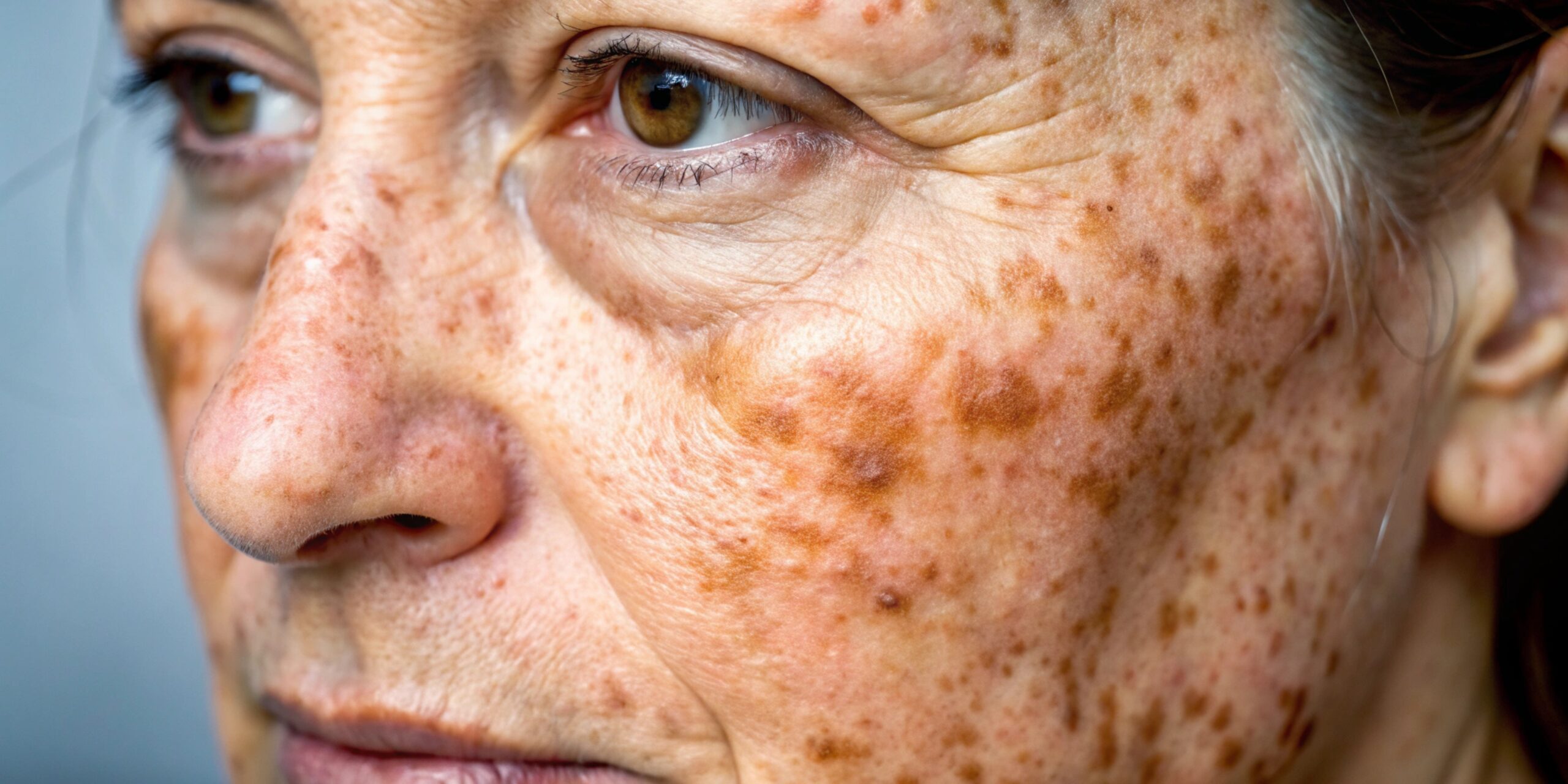
Age areas-- often called solar flare, liver areas, or lentigines-- are flat, darkened spots that establish on sun-exposed skin. These spots commonly vary from tan to dark brown and can differ in dimension from little blemishes to larger spots over half an inch throughout. They most typically appear on the backs of hands, forearms, face, shoulders, and top back. While they're called "age spots," they're really much more related to sun exposure than maturing itself, though they do become a lot more common after age 40. While age areas present no medical danger, lots of clients pick to have them dealt with for visual factors. During your examination, we'll examine your skin type, the degree of pigmentation, and your goals to suggest one of the most suitable treatment strategy.
Various Other Skin Areas That End Up Being A Lot More Common With Age
Flat, oblong locations of coloring, age spots often tend to show up on parts of the body, such as the face, hands, arms, shoulders and feet, that are revealed to the sun. Most usual in people older than 40, Non-Invasive Procedures they can be freckle-sized or greater than a half-inch in size, and array in color from brown to black. Age areas frequently form on areas of the body that are most regularly subjected to the sunlight, like the face, hands, neck, décolletage area, limbs. The main culprit behind age places is collective ultraviolet (UV) exposure from the sun or tanning beds. When your skin is revealed to UV rays gradually, it generates excess melanin-- the pigment that gives skin its color-- as a safety reaction.

Skin-lightening Lotions And Creams
Age areas are typically harmless and not indicative of a severe clinical problem. Nevertheless, it's essential to set apart age spots from various other skin disease, such as melanoma, which is a type of skin cancer cells. Regardless of their name, age places are not always triggered by age. Ultraviolet (UV) light triggers the overproduction of skin pigment called melanin.